Clear moisture targets
We document initial readings, identify affected materials (drywall, framing, subfloor), and set drying targets so you know what “dry” means for the job.
Serving Sacramento, California & surrounding areas
24/7 Emergency Response
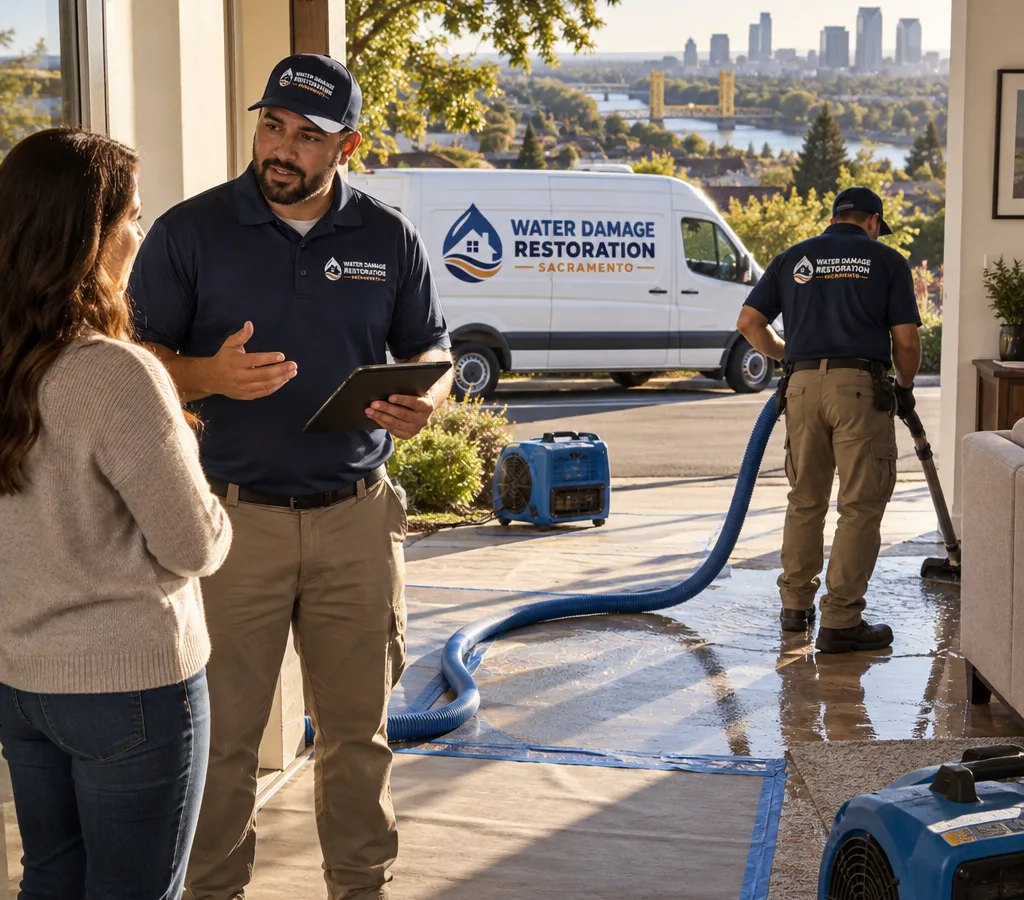
Water Removal · West Sacramento
Fast extraction, structural drying, and documentation to help you stabilize the property and move toward repairs with fewer delays.
Immediate Response
When water gets into flooring, baseboards, and wall cavities, the visible puddle is only part of the problem. Effective water removal in West Sacramento means extracting what you can see, then drying what you cannot see before swelling, odors, and secondary damage set in.
Water Damage Restoration Sacramento responds to residential and commercial losses on both sides of the river. Our crews work as water damage restoration specialists in the Sacramento area with the gear and on-site process needed to control moisture, protect materials that can be saved, and keep the job moving toward reconstruction.
We regularly see water damage in West Sacramento from supply line leaks under sinks, failed washing machine hoses, water heater leaks, overflowing tubs, and stormwater that finds its way through doors or low points in a building. No matter the source, the priority is the same: stop the water, remove it quickly, and verify drying with real measurements, not guesswork.
Extraction and Drying
A proper water removal job is a combination of extraction, controlled demolition when needed, and drying verification.
Typical steps include:
If you are dealing with water damage West Sacramento properties often suffer after a leak runs overnight, that moisture can travel under laminate, into subfloor seams, and behind cabinets. The plan should match how water actually moves through materials, not just what is visible on the surface.
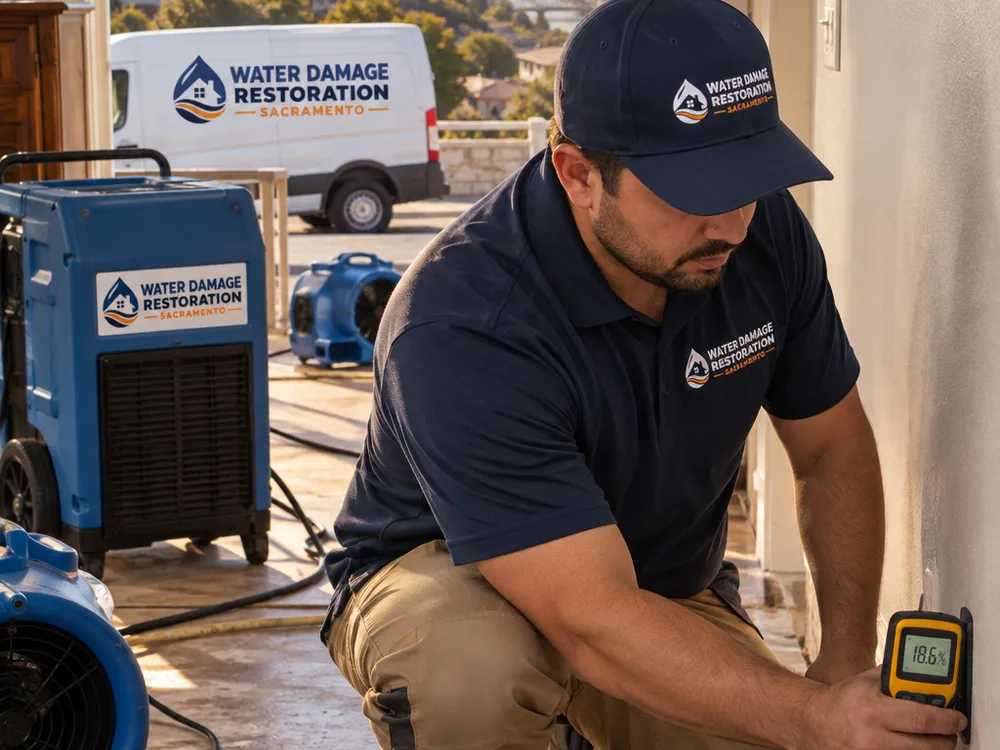
Operational Safeguards
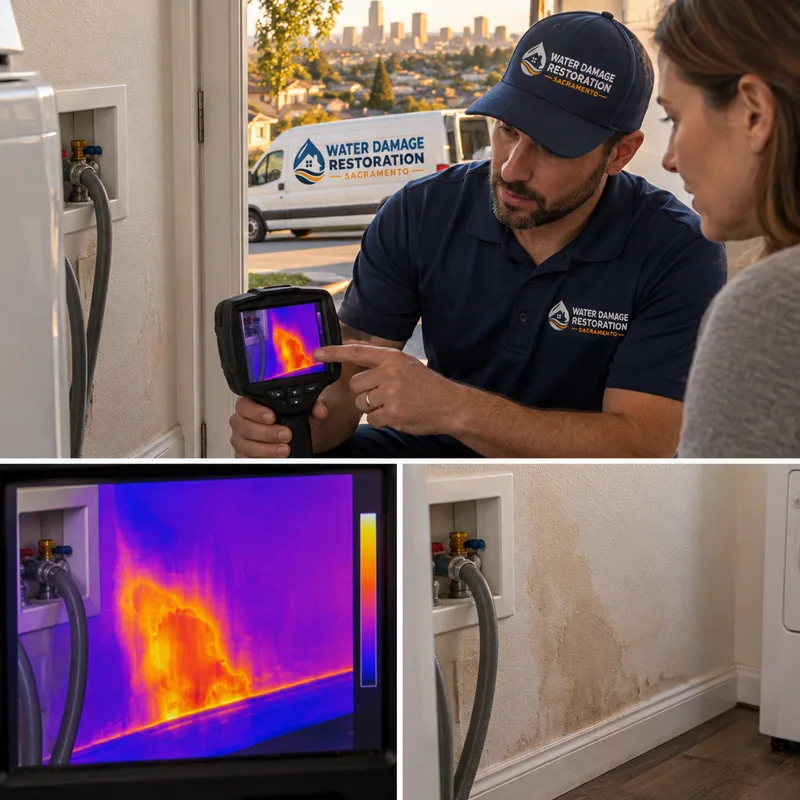
We document initial readings, identify affected materials (drywall, framing, subfloor), and set drying targets so you know what “dry” means for the job.
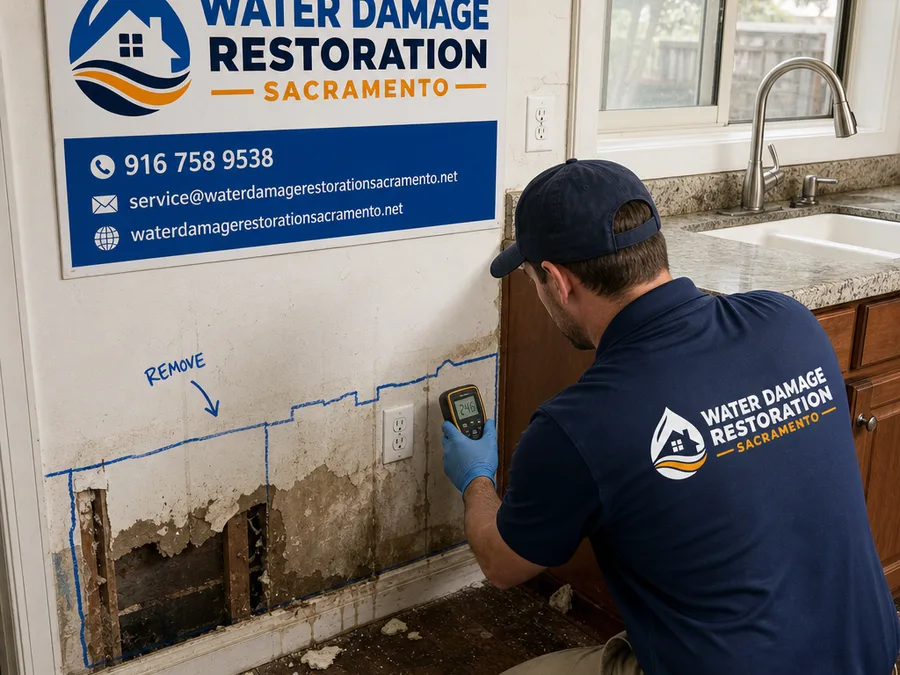
When wet drywall or insulation must come out, we use dust control and sensible containment so the rest of the property stays usable when possible.
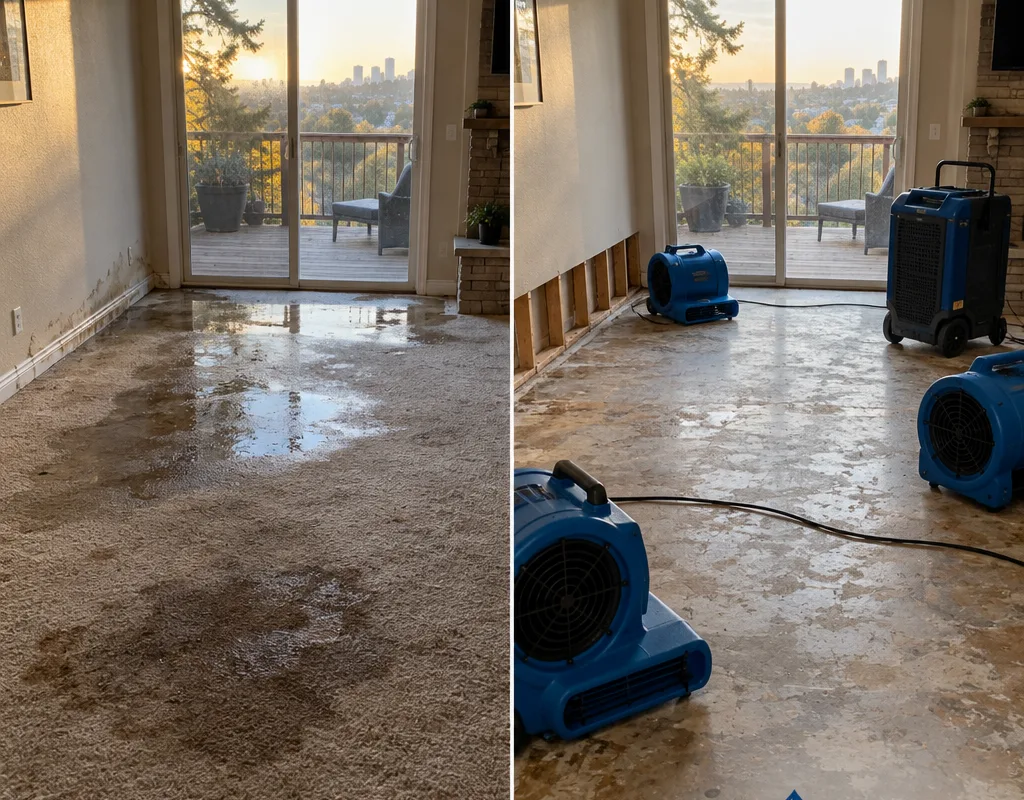
Dehumidifier type (LGR vs desiccant), air mover count, and placement are chosen based on the category of water, material type, and how far moisture migrated.
Drying is only the first phase. We can outline what a typical repair scope looks like so you can plan flooring, drywall, paint, and cabinet work without delays.
For offices, retail, and light industrial spaces, we focus on safety, trip-hazard reduction, and keeping access pathways open while drying runs.
Response Process
We confirm the water source is stopped, check for electrical and slip hazards, and protect floors and pathways for safe access.
We identify wet materials and likely migration paths (under flooring, into wall cavities, behind toe-kicks) and document readings to guide the drying plan.
We remove standing water and perform detailed extraction in edges and seams. When materials cannot dry effectively in place, we discuss controlled removal before proceeding.
Airflow and dehumidification are set up to match the space. We monitor progress with moisture meters and adjust equipment as conditions change.
Once materials meet drying goals, we provide documentation and a clear handoff so repairs can start with fewer setbacks.
Field Documentation
Cost Guidance
Water removal in West Sacramento typically ranges from about $900 to $3,500 for many residential losses, with larger floods and multi-room dry-outs often running $4,000 to $10,000+. A small, contained extraction and dry-out (one room, minimal material removal) sits on the lower end, while jobs involving drywall removal, saturated flooring, and multiple days of dehumidification trend higher.
Final pricing depends on how long the water sat, how far it traveled, the type of water, the amount of demolition needed to dry cavities, equipment load (air movers and dehumidifiers), and access constraints. The exact cost is confirmed after an on-site inspection and moisture map.
Frequently Asked Questions
Start water removal the same day whenever possible because moisture can wick into baseboards, drywall edges, and flooring seams quickly. Even if the visible water is gone, trapped moisture in pad, subfloor, or wall cavities can keep rising humidity and slow drying. If you cannot get help immediately, shut off the source, ventilate when outdoor air is dry, and avoid running HVAC if it is pulling humid air through wet materials.
Drywall is removed only when it is saturated, contaminated, crumbling, or blocking access to wet cavities that cannot dry effectively from the surface. For clean supply-line leaks, targeted cuts (often a small flood cut) can be enough to release trapped moisture and speed drying. We base that decision on moisture readings, not just how the wall looks.
Water removal focuses on extraction and removing bulk water, while West Sacramento water damage restoration includes the full dry-out process: moisture mapping, equipment setup, monitoring, controlled demolition when needed, and documentation that supports repair planning. On most losses, extraction is the first step, but verified structural drying is what prevents ongoing damage.
Sometimes, but it depends on the flooring type, how water got underneath, and how long it sat. Hardwood can cup or crown and may require specialized drying mats and careful control of dehumidification to reduce warping risk. Laminate often swells at seams and may not be salvageable once edges have absorbed water. We assess the installation and take moisture readings in the subfloor to guide whether drying in place is realistic.
Stop the water source, turn off power to affected areas if water is near outlets, and move small valuables and soft goods out of wet zones. If it is safe, blot or extract water with towels or a wet vac, and place aluminum foil or wood blocks under furniture legs to reduce staining. Avoid pulling up carpet or removing baseboards unless you are certain it will not damage wiring, plumbing, or finishes further.
Yes, we can provide the kind of documentation adjusters typically ask for, including moisture readings, equipment logs, and a written scope of what was done and why. Insurance coverage depends on your policy and the cause of loss, but clear documentation helps support the restoration portion of a claim when it is covered.
Start the Dry-Out
Tell us what happened and what areas are wet. We will schedule an on-site assessment, start extraction and drying, and give you a clear plan for what comes next.