Containment and safety controls
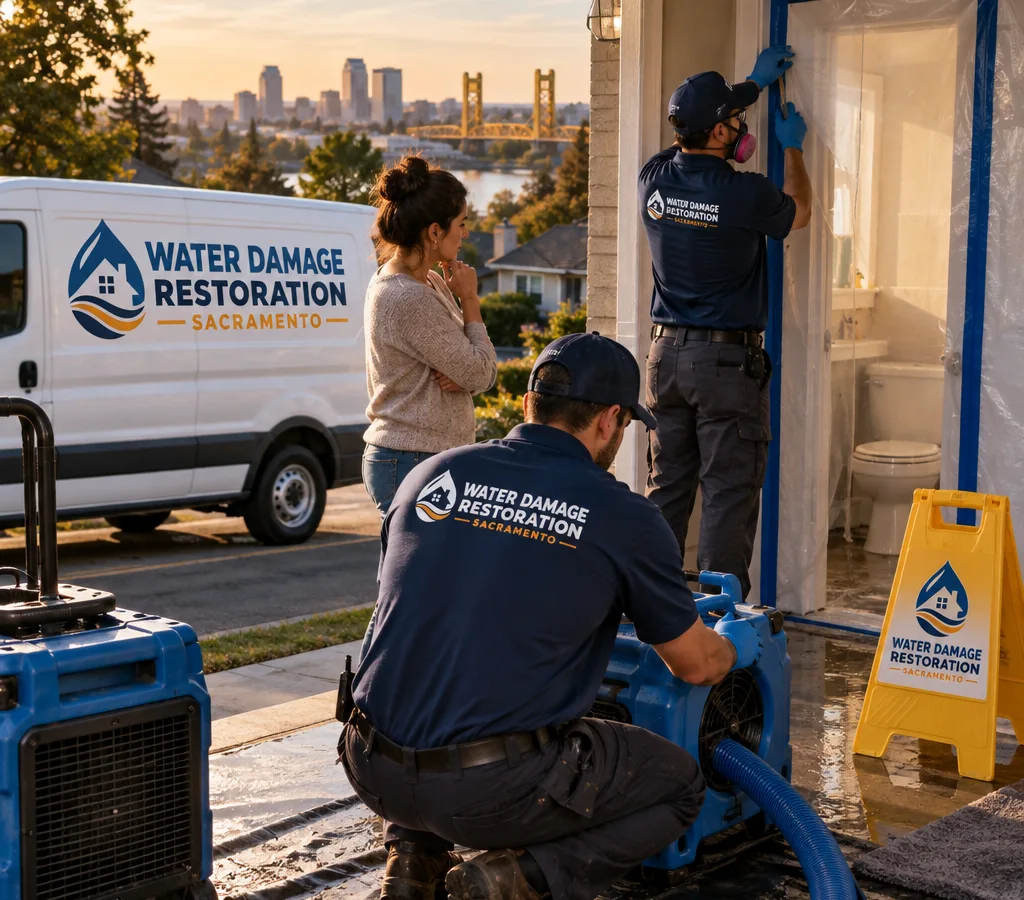
We isolate the impacted area with plastic sheeting, control airflow when needed, and use PPE and safe work practices to reduce exposure and keep contamination from spreading to clean rooms.
Serving Sacramento, California & surrounding areas
24/7 Emergency Response
Sewage Cleanup · Sacramento
Rapid response for hazardous sewage backups with safe removal, disinfection, drying, and rebuild coordination so your property can be used again as soon as it is truly safe.
Immediate Response
If you are searching for sewage cleanup Sacramento CA, you likely need help that is fast, careful, and documented. Sewage is Category 3 water: it can carry bacteria, viruses, and other contaminants that soak into porous materials and spread through a home or business. The right next step is not masking odors or mopping. It is controlled removal, disinfection, drying, and a plan for what must be removed versus what can be saved.
Water Damage Restoration Sacramento handles sewage cleanup in Sacramento for residential and commercial properties. Our crews set up containment to limit cross-contamination, extract and dispose of impacted materials, clean and disinfect affected areas, and dry the structure to reduce the risk of secondary damage. We work as water damage restoration experts around Sacramento, CA do: start with the hazard, verify what is affected, then document the work so you have a clear scope before any repairs begin.
Cleanup Scope
We isolate the impacted area with plastic sheeting, control airflow when needed, and use PPE and safe work practices to reduce exposure and keep contamination from spreading to clean rooms.
Standing sewage is removed with commercial extraction equipment. Materials that cannot be reliably decontaminated—often carpet pad, baseboards, insulation, and some drywall—are removed and disposed of correctly.
Hard surfaces are cleaned first, then disinfected with appropriate products and dwell times. Cleaning comes before disinfecting so the disinfectant can work as intended.
We dry framing, subfloors, and wall cavities as needed using dehumidifiers and air movers, and we monitor moisture to confirm drying progress instead of guessing.
Odors usually improve once contaminated materials are removed and surfaces are cleaned and dried. If needed, we use targeted deodorization methods after decontamination.
You get a written scope describing affected areas, what was removed, and what comes next. That makes rebuild decisions and insurance conversations much easier.
Sacramento Property Context
Sewage problems often show up as an overflowing toilet, a shower or tub that backs up with dark water, or floor drains that start pushing water during laundry or heavy use. The source can be a mainline blockage, a damaged sewer lateral, or a localized issue inside the building. Whatever the cause, cleanup should treat all impacted water as contaminated until proven otherwise.
In Sacramento, we frequently see jobs where contamination reaches low areas first: bathrooms, laundry rooms, garages, and ground-floor units. Homes in older neighborhoods such as Land Park and East Sacramento can have older drain lines and tight underfloor or crawl access, which can complicate drying and removal. Midtown and Downtown properties often have shared plumbing stacks and limited access for equipment, so containment and careful material handling matter. In Natomas, slab-on-grade construction can hide moisture movement at floor edges, so moisture mapping is important before flooring decisions are made.
If you suspect a sewer lateral issue, cleanup and repairs are different tasks. We can stabilize the interior, remove contamination, and document conditions so you can coordinate the right next trade for the underlying plumbing or lateral correction without delaying the health-and-safety work. When broader building repairs are required after decontamination, our property restoration services help keep the handoff from cleanup to rebuild straightforward.
Cleanup Process
We ask where the backup occurred, whether the water is still active, and which rooms are affected. If the source is still pushing sewage, stopping the flow comes first so the cleanup can hold.
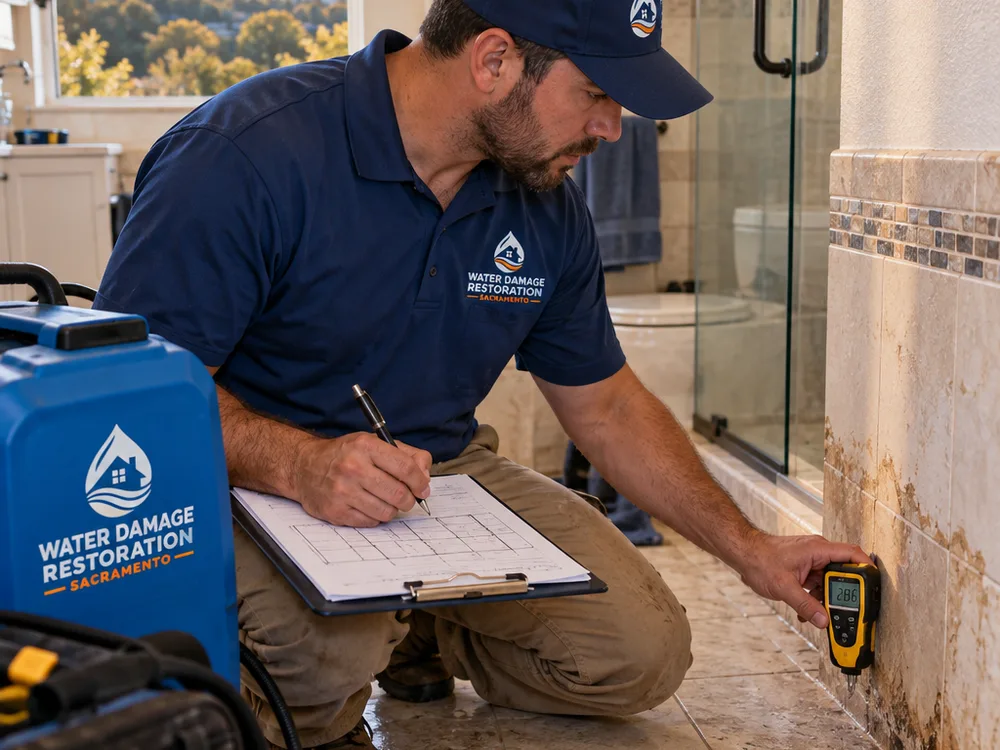
We identify impacted materials, check adjacent rooms, and map moisture in floors and lower walls. In multi-story buildings, we also check below the source area for seepage.
We protect clean areas with barriers and floor protection, and we plan traffic paths for removing waste and debris to reduce cross-contamination through hallways and entries.
Standing sewage is extracted. Porous materials that cannot be reliably decontaminated are removed so hidden contamination does not remain in wall cavities, under flooring, or in insulation.
Surfaces are cleaned and disinfected with appropriate dwell times, then we dry the structure using commercial drying equipment. We monitor moisture until materials are in a safe, dry range.
We document what was affected and what was done. If repairs are needed, we outline what gets replaced and what can stay so you can move forward with confidence.
Cost Guidance
Sewage cleanup in Sacramento typically ranges from about $1,500 to $7,500+, depending on how far contamination spread and how much material must be removed. A small, contained bathroom overflow is often at the low end, while backups that reach multiple rooms, soak carpet and drywall, or affect a crawlspace can cost more.
Final pricing depends on the category and volume of water, affected square footage, demolition needs—drywall, insulation, flooring, or cabinets—access for equipment and debris removal, required containment, and drying time. The exact cost is confirmed after an on-site inspection and written scope.
Property Owner Experiences
“Our toilet overflow turned into a sewage mess fast. The crew set up containment, removed the soaked materials, and explained what had to go versus what could be cleaned. The smell was gone after they finished the cleaning and drying.”
“We manage a small commercial space and had a backup through a floor drain. They documented everything and kept the work area controlled so the rest of the unit stayed usable while cleanup happened.”
Frequently Asked Questions
Yes, sewage is treated as hazardous (Category 3) because it can contain pathogens, and you should keep people and pets out of the impacted area until it is cleaned and disinfected. Whether you need to leave the entire home depends on how far it spread, whether bathrooms are usable, and whether containment can keep the rest of the home clean. We can help you make that call after a quick assessment.
Porous materials that absorb contamination often need removal, especially carpet pad, some carpeting, insulation, particleboard, and drywall that wicked sewage. Non-porous materials like tile, some sealed concrete, and many metals can often be cleaned and disinfected. The decision is based on where the sewage reached and whether the material can be reliably decontaminated.
Many single-room sewage cleanups can be stabilized the same day, with cleaning and initial drying started immediately, but drying and verification can take several days depending on materials and humidity. If demolition is needed, the cleanup phase is usually quicker than the rebuild phase. We provide a realistic timeline once we map the affected areas.
Yes, but it often requires controlled removal to access the affected areas. If sewage traveled under laminate, under carpet, or into wall cavities, surface cleaning alone is not reliable. We open up the affected sections, remove contaminated porous materials, then clean, disinfect, and dry the exposed structure.
Deodorizer can reduce odor temporarily, but lasting odor control comes from removing contaminated materials and cleaning and disinfecting the remaining surfaces, followed by proper drying. If odor remains after decontamination, we can use targeted deodorization methods that make sense for the specific materials and space.
We can provide documentation of the affected areas, photos, moisture readings, and a clear scope of work to support the claim process. Coverage varies widely by policy and by the cause of the backup, so the adjuster and your policy details determine what is covered. Our job is to make the condition and the required cleanup work clear and defensible.
Start With a Safety Assessment
Tell us what happened and which areas are affected. We will assess the contamination, outline what must be removed versus cleaned, and start the cleanup and drying process with clear documentation.