Supply line and appliance leaks
Failed washing machine hoses, refrigerator lines, and under-sink supplies can run for a while before anyone notices, soaking cabinets and the subfloor.
Serving Sacramento, California & surrounding areas
24/7 Emergency Response
Water Damage Restoration · Galt
Fast water cleanup, professional drying, and clear next steps to limit damage and get your property back to normal.
Immediate Response
If you are dealing with water damage in Galt, speed matters, but the first moves should be safe and documented. If water is still coming in, shut off the source if you can. If there is standing water near outlets, a breaker panel, or appliance cords, keep the area off-limits until power can be made safe. Take quick photos of the affected rooms, including close-ups of wet baseboards, flooring seams, and any ceiling staining.
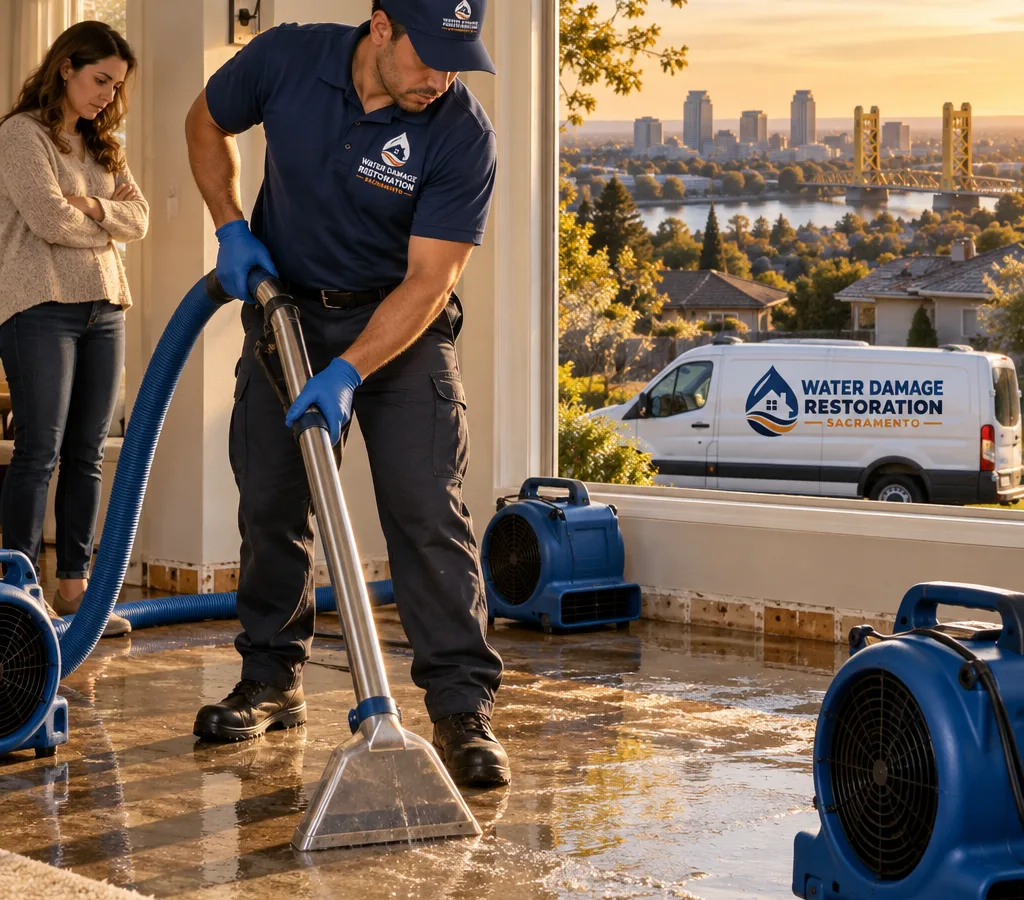
After that, the goal is to stop absorption and start controlled drying. Water wicks under flooring, into drywall, and behind baseboards within hours. A proper response is more than a quick vacuum. It includes moisture mapping, targeted water extraction, airflow and dehumidification, and removing materials that cannot be dried in place.
Water Damage Restoration Sacramento provides water damage restoration in Galt and nearby areas as a Sacramento company that focuses on clean work practices, accurate moisture readings, and a written scope before repairs begin.
Assessment and Drying
Most property owners are surprised by how far water travels. What looks like a small leak can spread under laminate, into carpet pad, and up drywall by capillary action. The right plan depends on the category of water, how long it sat, and what materials were affected.
Typical water damage restoration Galt projects include:
In Galt, homes often have a mix of slab-on-grade and raised foundation construction. Both can hide moisture in different ways. Slabs can keep water trapped under floating floors, while crawlspaces can hold humidity and slow down drying if not addressed. We base each plan on what we measure in your property.
Common Water Sources
Failed washing machine hoses, refrigerator lines, and under-sink supplies can run for a while before anyone notices, soaking cabinets and the subfloor.
A leaking water heater pan or a clogged condensate line can create repeated wetting that damages drywall and flooring at the same spot.
Toilet overflows and drain backups require the right cleaning approach based on what the water contacted, plus removal of porous materials when necessary.
Wind-driven rain can show up as ceiling stains or wet insulation. Drying the visible area is not enough if the insulation or framing is wet.
Overwatering near a wall or poor drainage can push moisture into lower drywall and baseboards, especially where landscaping stays wet for days.
Response Process
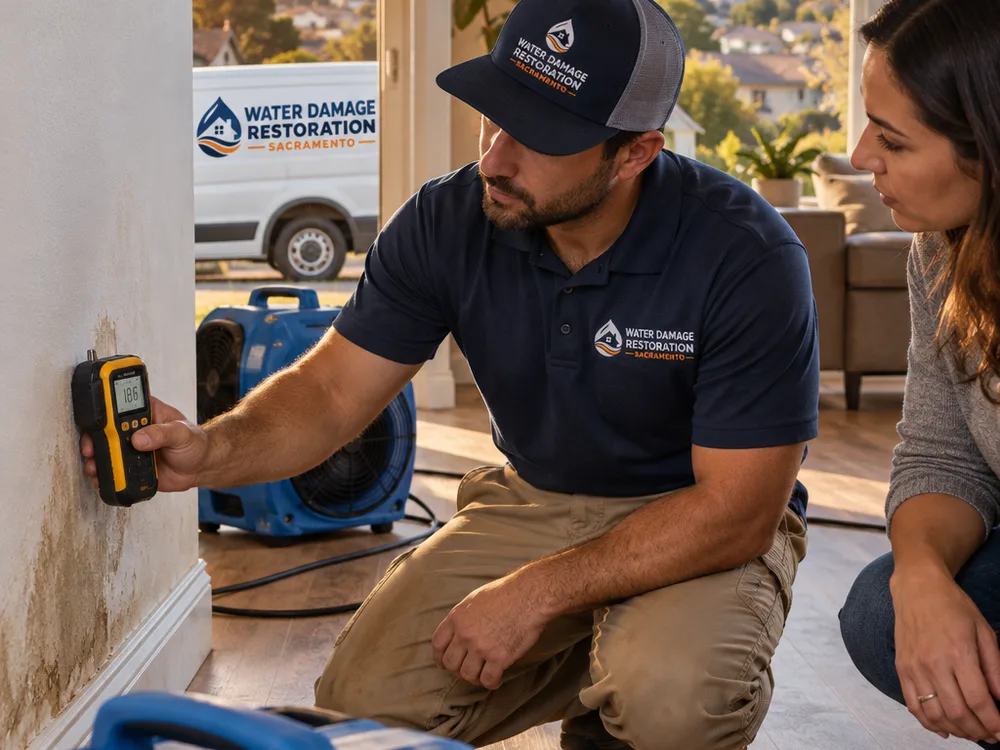
We identify the water source, check for obvious electrical hazards, and map moisture so the drying plan matches what is wet, not just what is visible.
We remove standing water first, then decide what materials can be dried in place and what needs to be removed to prevent trapped moisture.
Air movers and dehumidifiers are positioned to move moisture out of materials efficiently. We adjust equipment and placement based on follow-up measurements.
If the water source requires it, we clean affected surfaces and apply targeted deodorization. When contamination is present, porous materials may need removal.
Once materials reach appropriate dry levels, we document the condition and outline the repair scope, such as drywall patching, baseboard replacement, and flooring transitions.
Moisture Verification
A lot of long-term damage comes from water that is left in hidden cavities. Drywall can look fine while the back side stays damp. Flooring can look dry while moisture remains in the underlayment or subfloor. That is why moisture readings and follow-up checks are part of professional water damage restoration in Galt.
Two common problems we help prevent:
If your loss involves drain water or anything that may be contaminated, the cleanup approach changes. Materials like carpet pad, insulation, and some drywall may need removal rather than drying in place. We will explain what we are doing and why, so you can make informed decisions before repairs start.
Cost Guidance
Water damage restoration in Galt typically ranges from about $1,000 to $7,500+, depending on how much water spread, what materials are affected, and whether drywall or flooring needs removal. A small, contained clean-water leak with limited drying may land near the low end, while multi-room losses, wet cabinets, or longer drying times push costs higher.
Final pricing changes with moisture levels, accessibility such as a crawlspace, tight bathroom, or second-story leak, the category of water, and how much repair work is required after drying. The exact cost is confirmed after an on-site inspection and moisture map.
Homeowner Experiences
“We had a supply line leak that soaked the hallway and part of the living room. They explained what needed to come out, set up drying equipment the same day, and kept checking moisture until it was actually dry. The repair plan was clear and the house stopped smelling damp within a couple of days.”
“What I appreciated most was the documentation. Photos, readings, and a straightforward scope so we knew what was happening before any repair work started.”
Frequently Asked Questions
In most cases, the right move is to start inspection, extraction, and drying as soon as possible because water continues to absorb into drywall, flooring, and framing over time. Availability varies by the day, but we prioritize active leaks, standing water, and situations where moisture is spreading to multiple rooms.
Some drywall can be dried if it is a clean-water loss, the wetting is limited, and moisture readings show it is responding to drying, but drywall that is swollen, crumbling, or affected by contaminated water usually needs removal. We confirm with moisture measurements and the condition of the material at the base and seams, not just surface appearance.
Water cleanup focuses on extracting water and drying materials, while full restoration includes the repair phase, such as replacing drywall sections, baseboards, insulation, and restoring the affected finishes once the structure is dry. Many Galt projects need both phases because drying often requires selective removal before repairs can be completed correctly.
Yes, we can provide the documentation insurers usually request, including photos, moisture readings, and a clear scope of work, but coverage depends on your policy and the cause of loss. If you are filing a claim, keep any damaged parts you replace if practical and avoid throwing away key evidence before it is documented.
Drying time commonly takes 3 to 5 days, but it can be shorter or longer depending on the amount of water, humidity, airflow, and what materials were saturated. We monitor progress with moisture readings and adjust equipment placement until affected materials reach appropriate dry levels.
Often it is safe to stay in the home during drying, especially for clean-water losses, but it depends on the extent of demolition, electrical safety, and whether contaminated water is involved. If containment is needed or certain rooms must be kept off-limits, we will explain the safety plan before equipment is left running.
Start With an Inspection
Tell us what happened and what areas are wet. We will walk you through immediate next steps, inspect the damage, and provide a written scope for cleanup, drying, and any needed repairs.