Burst or leaking supply lines
Pin-hole leaks, failed angle stops, fridge lines, and sudden pipe breaks can soak walls and floors quickly. Rapid extraction and cavity drying helps limit how much needs removal.
Serving Sacramento, California & surrounding areas
24/7 Emergency Response
Water Damage Repair · Folsom
Fast water removal, careful dry-out, and repair planning that helps prevent mold and secondary damage after leaks, floods, or burst pipes.
Immediate Response
When water is inside your home or business, the first hours matter. Water spreads under flooring, wicks into drywall, and can reach cabinets and insulation before it looks severe from the surface. Our team handles water damage repair Folsom property owners rely on when they need quick water removal, documented moisture checks, and a clear plan to get the structure dry and repair-ready.
Our emergency water removal also serves Folsom. You get field-tested methods—extraction, controlled drying, dehumidification, and targeted removal of unsalvageable materials—backed by written notes and photos so you understand what was affected and why each step is recommended. Our crew focuses on stopping the spread, drying the structure correctly, and protecting the parts of the home you can save.
In Folsom, water losses often show up in practical ways: a supply line leak behind a vanity, a water heater failure in the garage, a dishwasher overflow that reaches the hallway, or rainwater intrusion around an older window or door. No matter the source, the goal is the same: remove water fast, dry with measured airflow and dehumidification, and repair what cannot be safely dried.
Assessment and Drying
Water damage repair is more than drying. It is a controlled process that prevents secondary damage and sets repairs up for success.
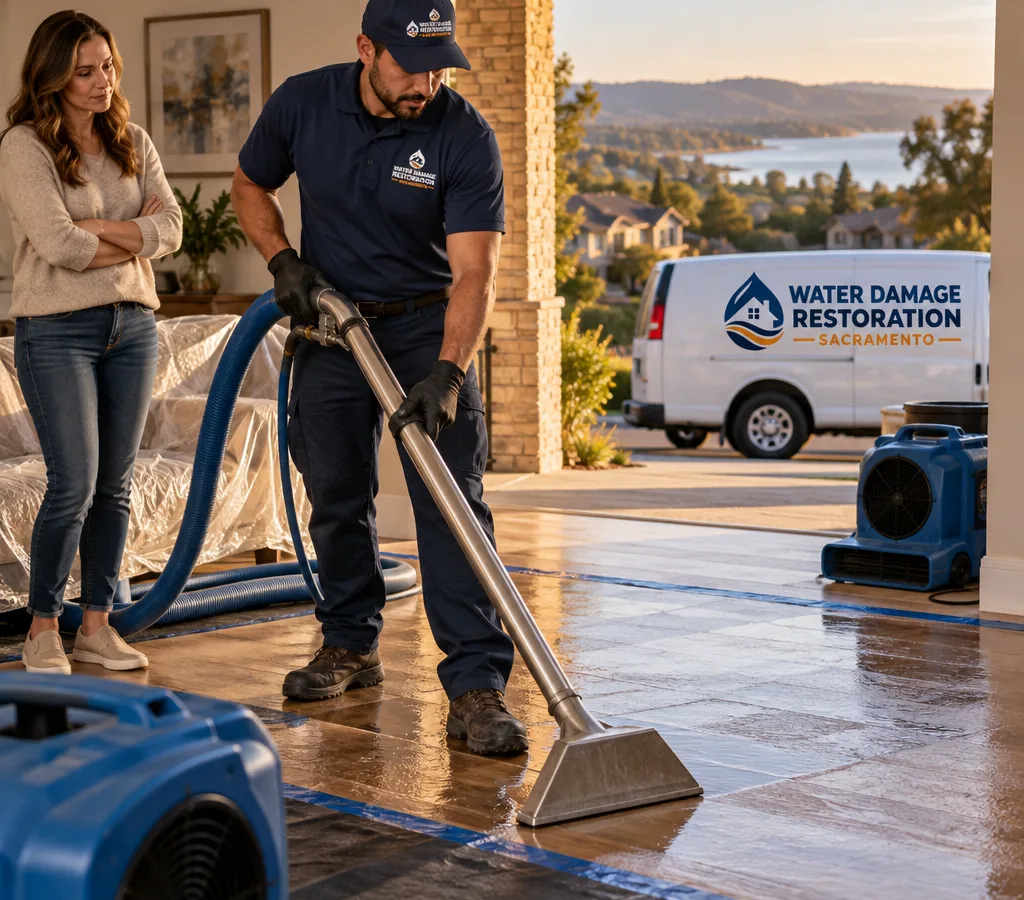
First we identify the category of water and where it traveled. Clean water from a supply line is handled differently than water that has contacted the ground, a drain line, or other contaminants. Next comes water removal in Folsom homes and commercial spaces using extraction tools matched to the surface: truck-mounted or portable extractors, weighted wands for carpet, and squeegee tools for hard floors.
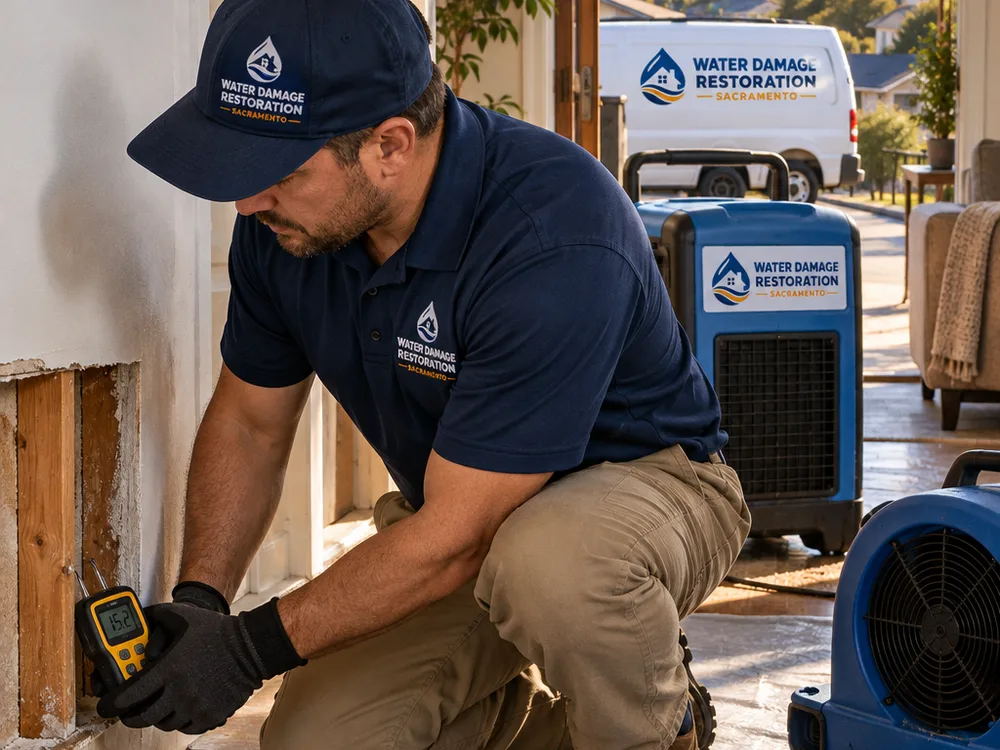
Drying is then built around measurements, not guesses. We place air movers to create consistent evaporation, and dehumidifiers to pull moisture out of the air so materials can release water instead of staying saturated. We track moisture content in drywall, framing, and subflooring, and adjust equipment placement as readings improve.
When materials cannot be dried safely, we remove them in a contained way. That may mean cutting wet drywall to a clean line, pulling baseboards for airflow behind walls, lifting pad under carpet, or removing affected insulation. If microbial growth is present or likely because the loss sat too long, we recommend appropriate cleaning and containment steps.
The final stage is repair planning: what gets replaced, what can be restored, and what needs drying verification before rebuild. If you are also dealing with sewage or serious contamination, sewage cleanup follows additional safety controls that go beyond standard drying.
Damage Scenarios
Pin-hole leaks, failed angle stops, fridge lines, and sudden pipe breaks can soak walls and floors quickly. Rapid extraction and cavity drying helps limit how much needs removal.
Garage water heaters and condensate drain clogs can flood nearby rooms or storage. We focus on drying slab edges, bottom plates, and adjacent finishes where moisture lingers.
Dishwasher, washing machine, and sink backups often spread under LVP, laminate, and tile. We confirm whether water reached the subfloor and whether cabinets wicked moisture.
Even small overflows can travel to hallways and closets. We check for moisture at thresholds, vanity toe-kicks, and behind baseboards where damage hides.
Rain and wind can push water past doors, window frames, and flashing points. We dry affected assemblies and document likely entry paths so you can address the cause.
Offices and retail spaces need fast drying to reduce downtime. We stage equipment to keep walkways safe and provide drying notes helpful for property managers.
Response Process
We confirm the water source is stopped and identify electrical and slip hazards. If materials are contaminated, we plan containment and PPE before disturbing anything.
We inspect affected rooms and likely migration paths, then take baseline moisture readings in floors, walls, and trim. Photos and notes help keep decisions clear.
We remove standing water first, then determine what can be dried in place and what should be removed to prevent trapped moisture. The goal is to expose wet cavities without unnecessary demolition.
Air movers and dehumidifiers are placed based on room layout and readings, not a one-size setup. We manage temperature and humidity so materials can dry at a steady rate.
We re-check moisture, relocate equipment as conditions change, and watch for areas that dry slower such as behind cabinets, under floating floors, and inside wall cavities.
Once readings show the structure is dry, we outline next repair steps. If mold is found during the work, we can coordinate the right containment approach for mold remediation so the rebuild does not trap a problem behind new finishes.
Cost Guidance
Water damage repair in Folsom typically ranges from $1,200 to $6,500 for extraction, drying equipment, and limited material removal, while larger losses with multiple rooms, cabinet impacts, or significant demo and rebuild planning can run $8,000 to $25,000+.
Your total price depends on how long the water sat, how far it spread—including under floors and into walls—the water category, access constraints, and what materials must be removed to dry safely. The exact scope and cost are confirmed after an on-site inspection and moisture mapping.
Homeowner Experiences
“A supply line leak soaked our hallway and the edge of the kitchen. They explained what needed to come out, set up drying equipment the same day, and kept checking moisture until everything was ready for repairs.”
“We had an overflow that went under the flooring and into a closet. The crew found the hidden wet areas and documented everything clearly, which made the next steps much easier.”
“Professional, straightforward, and careful around our belongings. The drying plan made sense and they adjusted fans and dehumidifiers as the readings changed.”
Frequently Asked Questions
In many cases we can begin water removal the same day, depending on current demand and the severity of the loss. The priority is extraction and stabilizing humidity so water does not keep migrating into baseboards, drywall, and subfloors while you wait.
Often you can stay in the home if the affected area is limited and power remains safe, but it depends on the water category, the amount of demolition required, and whether drying equipment must run in main living areas. If contaminated water is involved or multiple rooms need containment, temporary relocation can be the safer option.
Stop the water source if it is safe, shut off power to wet areas if outlets or fixtures are involved, and move small valuables out of the affected zone. Avoid running household fans straight at wet walls if you suspect contamination, and do not seal up wet areas with plastic because it can trap moisture.
Most drying setups run about 3 to 5 days, but thicker assemblies, wet subfloors under finished flooring, or water that traveled into wall cavities can take longer. We rely on moisture readings, not the calendar, to confirm when materials are actually dry.
Sometimes, yes, but it depends on material type and how long it was wet. Solid wood and some tile assemblies may be salvageable with proper drying access, while swollen MDF toe-kicks, delaminated laminate, and soaked particleboard components often need replacement to avoid long-term odor, warping, or microbial growth.
Yes, we can provide photos, notes, and drying documentation that support the scope of work. Coverage varies by policy and cause of loss, but clear moisture mapping and an itemized plan typically help reduce confusion about what was affected and what repairs are reasonable.
No, but the risk increases when materials stay wet, especially inside walls, under flooring, or in insulation where airflow is limited. Fast extraction and controlled dehumidification are the best way to reduce risk, and if growth is found we will outline containment and cleaning steps before repairs move forward.
Start With an Inspection
Tell us what happened and what areas are wet. We will walk you through next steps, inspect the affected materials, and provide a written scope for water removal, drying, and repair planning.