Burst or leaking supply lines
Hot water lines, icemaker lines, and under-sink valves can release a lot of water quickly. We focus on fast extraction and targeted removal so cabinets and walls are not left holding moisture.
Serving Sacramento, California & surrounding areas
24/7 Emergency Response
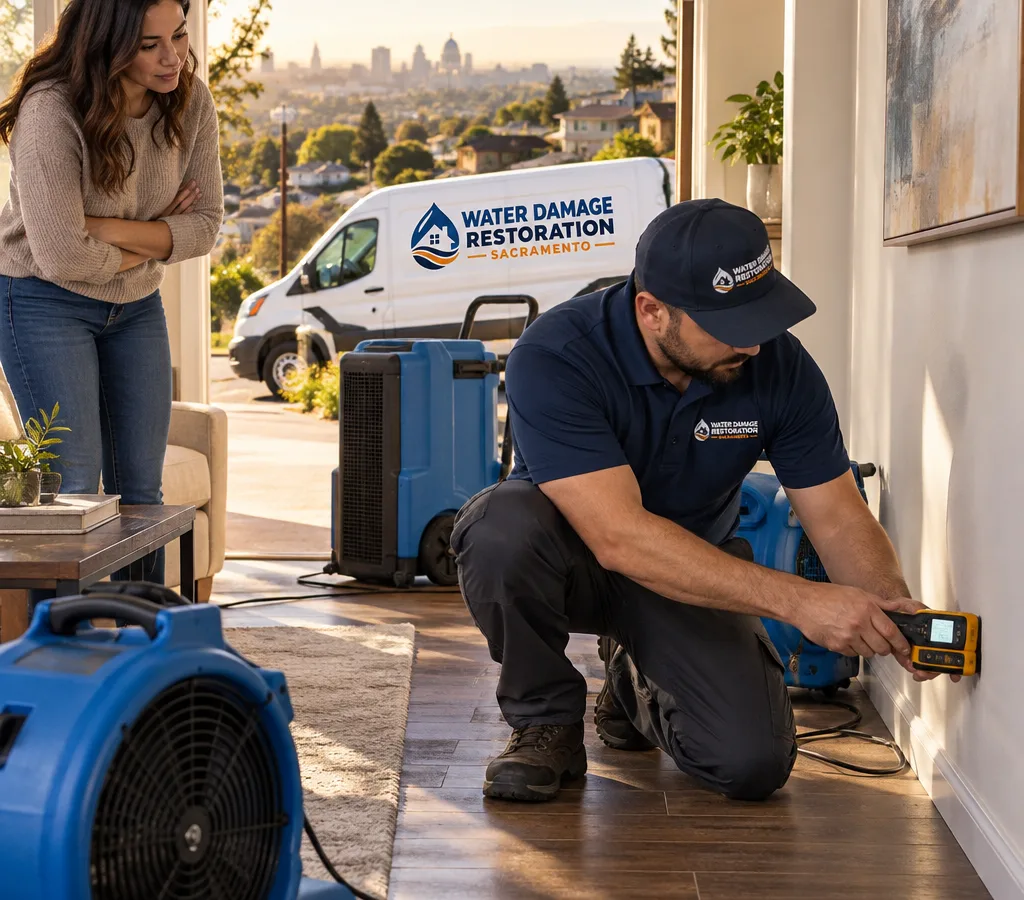
Water Damage Restoration · Elk Grove
Water moves fast through drywall, flooring, and insulation. We respond quickly to stop the source, remove moisture, and document the loss so you can make clear decisions before damage spreads.
Immediate Response
Elk Grove water damage restoration starts with two priorities: stop the water and control moisture. Whether you are dealing with a supply line break, a dishwasher leak, a backed-up sink, or rainwater intrusion, the first hours matter because water can wick into baseboards, cabinets, subfloor, and insulation.
Our team at Water Damage Restoration Sacramento handles emergency water mitigation in Elk Grove, then follows through with cleanup, drying, and restoration planning. We work as water damage restoration specialists serving Sacramento and regularly respond throughout the south Sacramento area when homes and small businesses need a practical plan, clear documentation, and a dry structure.
If you are unsure what type of water you have, treat it as unsafe until it is assessed. Clean-water leaks can turn into contamination once they contact building materials, and odor problems often come from moisture trapped behind finishes rather than the visible puddle.
Assessment and Drying
When people search water damage restoration Elk Grove, they usually need more than extraction. A proper job covers the building science pieces that prevent mold and material failure.
Typical scope includes:
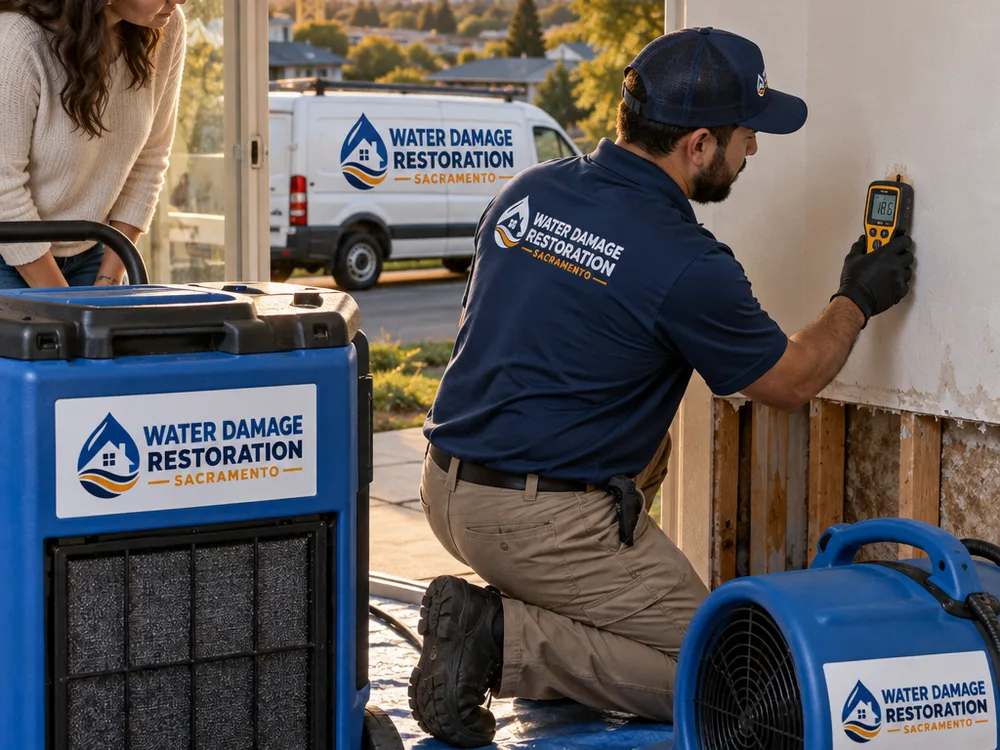
In Elk Grove homes with slab foundations, water can spread laterally under flooring and into wall plates before it shows on the surface. Moisture mapping with meters and thermal imaging helps locate affected areas so the drying plan matches what is actually wet.
Water Loss Types
Hot water lines, icemaker lines, and under-sink valves can release a lot of water quickly. We focus on fast extraction and targeted removal so cabinets and walls are not left holding moisture.
Overflows can affect multiple rooms through door thresholds and seams. We check under flooring edges and along baseboards where water often wicks and stays trapped.
Dishwashers, washers, and refrigerators often leak slowly, soaking subfloor and toe-kicks. Drying usually requires pulling toe-kicks and checking behind cabinets for wet insulation.
Storm water that enters around penetrations can wet attic insulation and ceiling drywall. We identify the wet path and dry the structure while you arrange permanent exterior repairs.
If water migrates under the home, drying may involve ventilation control, dehumidification, and removal of wet insulation or vapor barrier sections where contaminated.
Offices and small retail spaces often need after-hours extraction and containment planning so operations can continue while drying equipment runs.
Mitigation Process
We start by confirming the source category—clean, gray, or contaminated—checking for electrical hazards, and identifying materials that cannot be saved. If a shutoff is needed, we walk you through it.
We use moisture meters and thermal imaging to map affected areas. This matters because water can travel behind baseboards, under floating floors, and into adjacent rooms without obvious surface signs.
We remove standing water and, when required, open wet assemblies through drywall cuts, baseboard removal, or insulation removal. Opening the right areas speeds drying and reduces the chance of odor problems later.
Air movers and dehumidifiers are placed based on readings and room volume. We track progress with documented moisture checks until materials reach dry standards appropriate for the structure.
After drying, we clean affected surfaces and discuss repairs, rebuild coordination, and what documentation you will want for a claim or property file. We also explain broader regional response options when needed.
Cost Guidance
Elk Grove water damage restoration typically ranges from about $1,200 to $6,500+, with small clean-water leaks in one room often landing on the lower end and multi-room losses with demolition, floor removal, or contamination running higher. Large losses can exceed this range when drying time, labor, and rebuild scope increase.
Your price depends on the category of water—clean versus contaminated—how far it spread, including under flooring, what materials need removal, required equipment days for dehumidifiers and air movers, access constraints, and documentation needs for insurance. The exact cost is confirmed after an on-site inspection and moisture mapping.
If you have water damage in Elk Grove, getting a written scope early helps limit preventable tear-out and keeps the drying plan focused on what is actually wet.
Call for Emergency HelpFrequently Asked Questions
Start water mitigation as soon as the source is stopped because moisture spreads into drywall edges, trim, and subfloor fast. In the first day, the goal is extraction and airflow; after that, trapped moisture becomes the bigger problem. If you cannot get help immediately, move items off wet floors, blot what you can, and run fans only if the water is clean and power is safe.
First, stop the water at the fixture shutoff or main shutoff if it is safe, then shut off electricity to affected areas if outlets or appliances are wet. Next, take clear photos of affected rooms and visible sources, and move valuables and furniture to dry areas. Avoid disturbing suspected contaminated water, including sewage or dishwasher discharge, without proper protection.
Most structural drying takes about 3 to 5 days, but it can be shorter for minor losses and longer when water is under flooring or inside wall insulation. Drying time depends on how saturated materials are, temperature and humidity, and whether assemblies are opened up to allow airflow. Progress should be verified with moisture readings, not just how the surface feels.
Sometimes, but it depends on the material and the water category. Solid wood components may be salvageable with fast drying, while swollen MDF, delaminated engineered wood, and wet insulation often need removal. Cabinet toe-kicks and wall bases are common hidden wet zones, so we inspect behind and beneath before saying something is safe to keep.
Yes, we can provide the photos, moisture logs, and written scope that insurance adjusters typically request for water damage restoration Elk Grove claims. Coverage depends on the cause of loss and the policy, so we document what happened, what was affected, and what steps were required to dry and clean the structure.
Contamination is determined by the source and where the water traveled. Water from toilets beyond the tank supply, backups, and water that contacted ground or unknown debris is treated as contaminated, which changes cleanup methods and what materials must be removed. When in doubt, we take the safer approach and build the mitigation plan around occupant health and building standards.
Persistent odor, warping at floor edges, bubbling paint, soft baseboards, or recurring humidity in one room can indicate moisture behind finishes. In Elk Grove homes, moisture can travel along slab edges or under floating floors and not show until later. Moisture meter checks at the base of walls and along seams are the reliable way to confirm dryness.
Start With a Clear Scope
Tell us what happened, what areas are wet, and whether the water is clean or possibly contaminated. We will outline next steps, explain what drying will involve, and provide a clear scope so you can protect the property and move forward.