Emergency water extraction
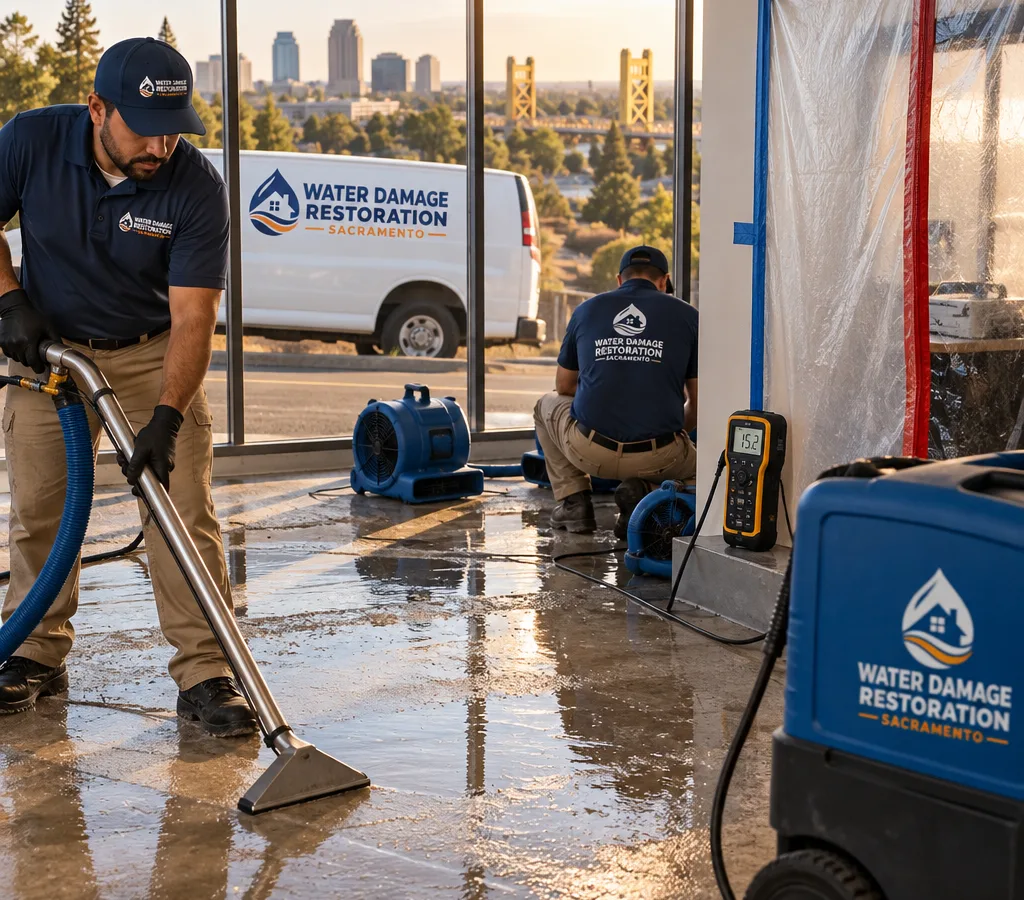
Pumping and extraction to remove standing water quickly, then targeting hard-to-reach areas like under shelving, behind casework, and around floor drains.
Serving Sacramento, California & surrounding areas
24/7 Emergency Response
Commercial Restoration · Sacramento
Rapid water extraction, structural drying, and odor control for offices, retail, and facilities so you can reopen sooner and avoid long-term damage.
Immediate Response
If you are searching for commercial water damage restoration Sacramento property owners can rely on, you need two things fast: a plan to stop the spread of water and a drying strategy that protects materials, inventory, and indoor air.
Water Damage Restoration Sacramento handles commercial losses with practical jobsite management: documenting what is wet, extracting water, setting drying equipment based on measured readings, and coordinating work so your staff, tenants, or customers can get back into the space. Our crews work as water damage restoration pros throughout Sacramento and focus on reducing downtime while protecting the parts of the building that are expensive to replace, such as flooring systems, wall assemblies, millwork, and electrical areas.
In Sacramento, water problems often spike during heavy winter storms, and older commercial buildings can hide moisture behind plaster, multiple remodel layers, and shared walls. That is why we lean on moisture mapping and controlled drying rather than guessing by surface appearance.
Restoration Scope
Pumping and extraction to remove standing water quickly, then targeting hard-to-reach areas like under shelving, behind casework, and around floor drains.
Air movers and dehumidifiers placed to match the affected materials, with moisture readings tracked so drying decisions are based on data, not timelines.
When needed, we isolate work zones to limit dust and odors and to keep unaffected areas usable for employees and customers.
Cleaning of affected surfaces and contents as appropriate, plus odor control after a supply line break, roof leak, or overflow.
Careful removal of unsalvageable drywall, insulation, or base materials so the building can dry correctly and rebuild can start on stable substrates.
Clear photos, notes, and drying logs that help building owners, property managers, and insurance adjusters understand what happened and what was done.
Commercial Properties
Commercial water losses rarely look like a single puddle. Water migrates under flooring, wicks up walls, and can travel into adjacent suites through shared framing. We approach each property based on use, traffic, and critical operations.
Common Sacramento projects include offices with carpet tile and modular walls, retail spaces with stocked displays, restaurants with kitchen-adjacent water lines and floor drains, and multi-tenant buildings where one unit's leak affects the next. For facilities near Midtown and Downtown, we also plan around limited parking and busy sidewalks so equipment setup and material removal do not disrupt neighbors more than necessary.
If the loss involves contaminated water—for example, sewage or long-standing water—we add the appropriate controls and cleaning steps and will explain what can be saved versus what should be removed for health and odor reasons.
Response Process
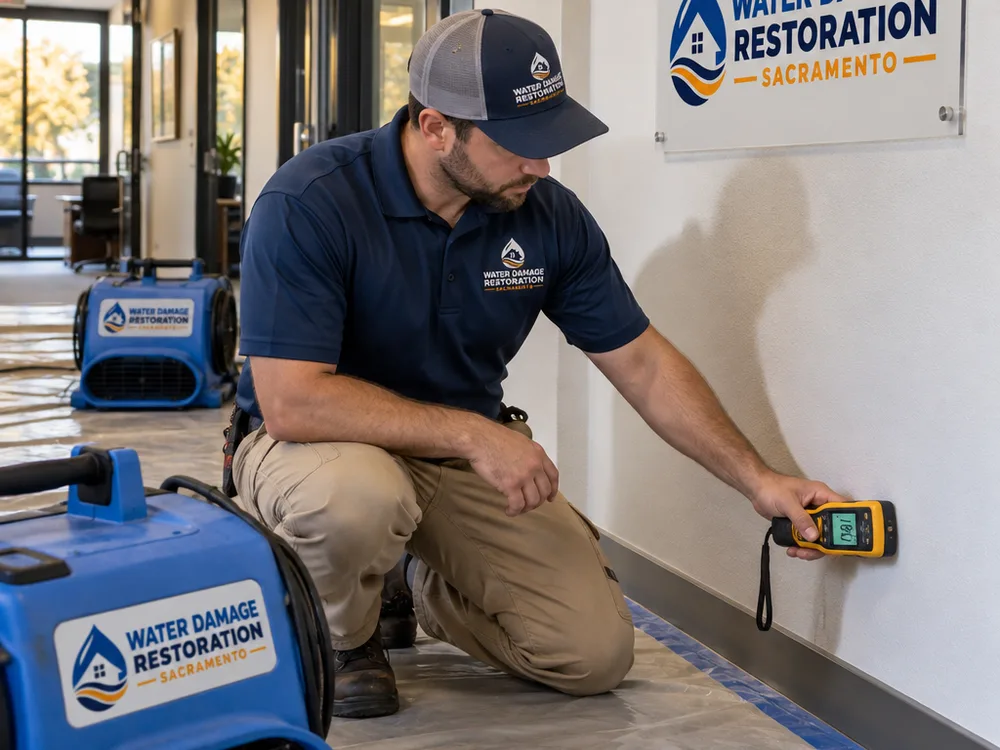
We identify the source category, map affected materials, check likely migration paths beneath flooring, into wall cavities, and around penetrations, and set a plan for access and safety.
Standing water is extracted first. Then we remove or protect at-risk materials and establish airflow and dehumidification so the wet area stops expanding.
Equipment is set based on what is wet, not on square footage alone. We monitor moisture content and humidity, adjusting placement to keep drying moving without over-drying occupied areas.
After drying targets are met, we clean affected surfaces and address odor. If repairs are needed, we provide a clear scope so reconstruction can proceed without reopening wet materials.
Cost Guidance
Commercial water damage restoration in Sacramento typically ranges from $1,500 to $15,000+, with small, contained losses on the low end and multi-room, multi-day drying on the high end. A single office or suite with clean-water intrusion often falls around $2,500 to $7,500, while major flooding with selective demolition and content handling can exceed $20,000.
Final price depends on how far water traveled, water category, affected materials such as carpet, drywall, insulation, and cabinetry, access and hours, equipment days, and whether containment or after-hours work is required. Exact costs are confirmed after an on-site inspection and moisture mapping.
Commercial Client Experiences
“A supply line broke overnight and water got under our flooring into the next suite. The crew mapped moisture right away, set drying equipment the same day, and kept us updated on what was still wet. We were able to reopen sections of the office sooner than we expected.”
“We manage a small retail space and needed the work done without turning the store into a construction zone. They contained the wet area, documented everything for the adjuster, and the odor issue was handled after drying.”
Frequently Asked Questions
Start time depends on crew availability and the size of the loss, but commercial water damage restoration is treated as urgent because drying delays increase damage. If you reach out right away, we can typically schedule an on-site assessment quickly and begin extraction and equipment setup as soon as the job is approved.
Shut off the water source if it is safe, protect people from slip and electrical hazards, and move critical items away from wet areas. If you have access to the electrical panel and water is near outlets or equipment, keep staff out of those zones until they are evaluated. Avoid running HVAC over saturated areas if it is pulling in humid air and spreading odors.
Sometimes, yes, but only if moisture readings show the assembly can dry from available surfaces. Many commercial losses need selective removal because water becomes trapped behind vinyl wallcoverings, inside insulated cavities, or under glued-down flooring. We confirm the least-destructive option by moisture mapping rather than guessing.
Most clean-water commercial drying projects take about 3 to 5 days once equipment is set, but timelines vary with material type, how saturated the structure is, and air movement constraints in occupied spaces. Concrete, multiple flooring layers, and dense wall assemblies often extend drying time, which is why monitoring readings matters more than a calendar estimate.
Yes. For multi-tenant properties, we focus on documenting the affected footprint, preventing cross-contamination between suites, and coordinating access so neighboring businesses can stay open when possible. Clear communication is especially important when moisture migration crosses unit boundaries.
Mold risk increases when porous materials stay damp, so starting extraction and drying quickly is one of the best ways to reduce the chance of growth. We use moisture readings to confirm when materials are truly dry, because surfaces can look dry while the core remains wet.
Coverage depends on your policy, the source of the water, and how the loss occurred. We can provide documentation, photos, and drying logs that help support the claim review, but the carrier and adjuster determine coverage and payment terms.
If water is affecting your business, the next step is a fast on-site assessment with moisture mapping so you have a written scope, a drying plan, and a realistic timeline for reopening.
Call for Emergency HelpCommercial Emergency Response
Tell us what happened and what parts of the building are impacted. We will help you contain the damage, prioritize safety, and move the project from extraction to dry-out to restoration with clear documentation.