Soft drywall or bubbling paint
Drywall can hold moisture behind the surface; bubbling, peeling, and soft spots often mean the cavity is wet and needs verified drying.
Serving Sacramento, California & surrounding areas
24/7 Emergency Response
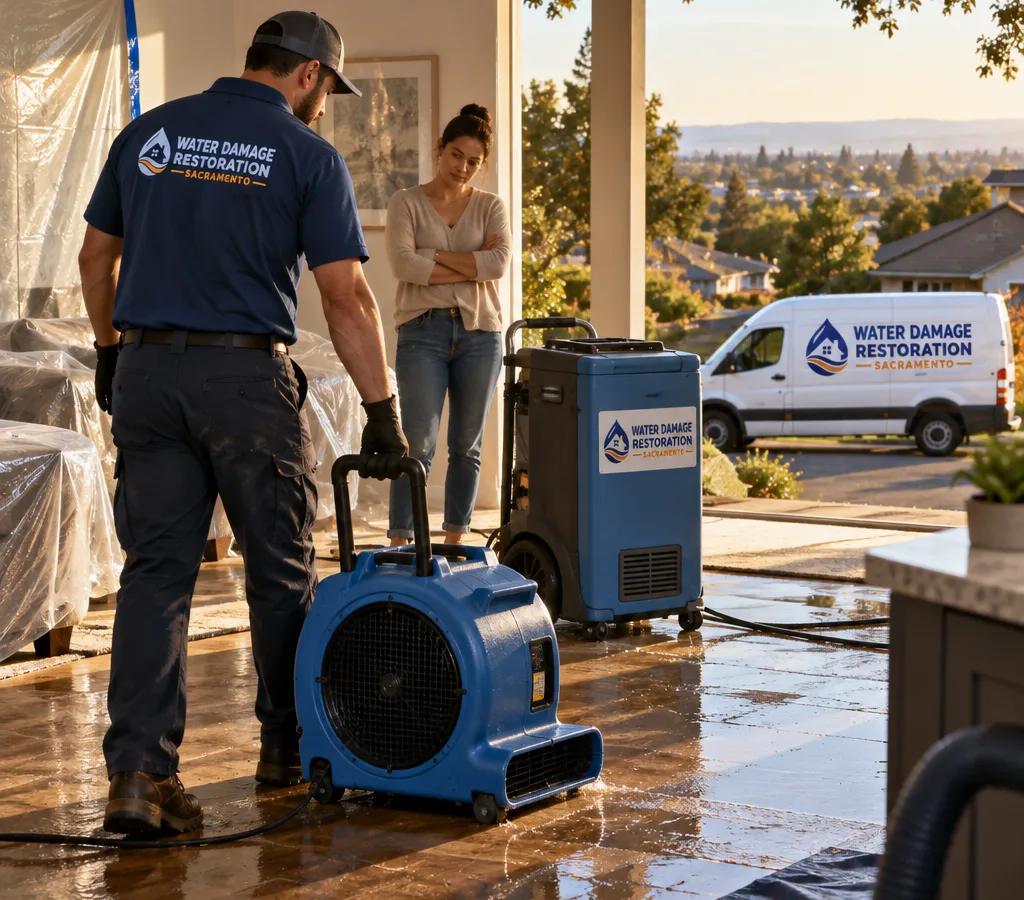
Water Damage Restoration · Citrus Heights
Fast response for leaks, floods, and burst pipes with a clear plan to dry, clean, and repair before the damage spreads.
Immediate Response
Citrus Heights water damage can go from a small wet spot to warped floors, swollen baseboards, and hidden mold risk in a matter of days. The right first steps are simple: stop the source, document what happened, then get professional drying and cleanup started as soon as it is safe.
Our Sacramento team handles water damage restoration in Citrus Heights for homes, rentals, and small commercial spaces. We focus on the parts that actually prevent long-term problems: moisture detection, controlled demolition when needed, thorough drying, antimicrobial cleaning where appropriate, and detailed documentation so you know what was affected and what was done.
We work across the Sacramento area and are set up for the kind of rapid response and hands-on work water losses require: on-site inspection, a written scope, and a drying plan that is adjusted as materials dry and readings change.
Assessment and Drying
Every loss looks different, but the goal stays the same: remove water, dry structure, clean affected areas, and restore the property to a safe, livable condition.
Typical water damage Citrus Heights projects include:
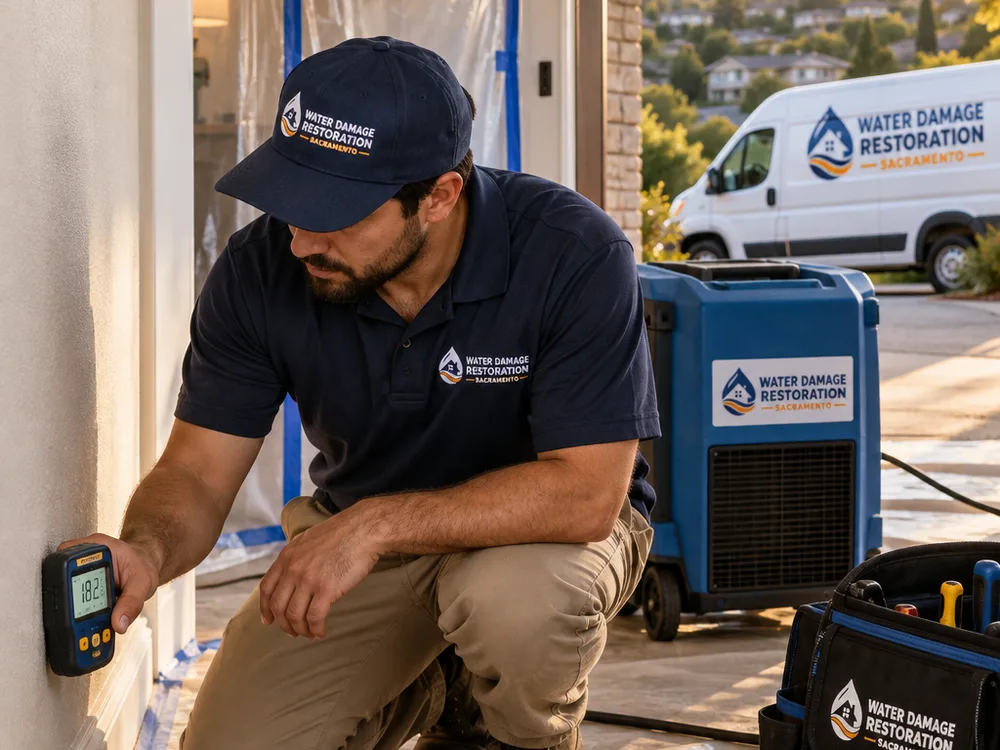
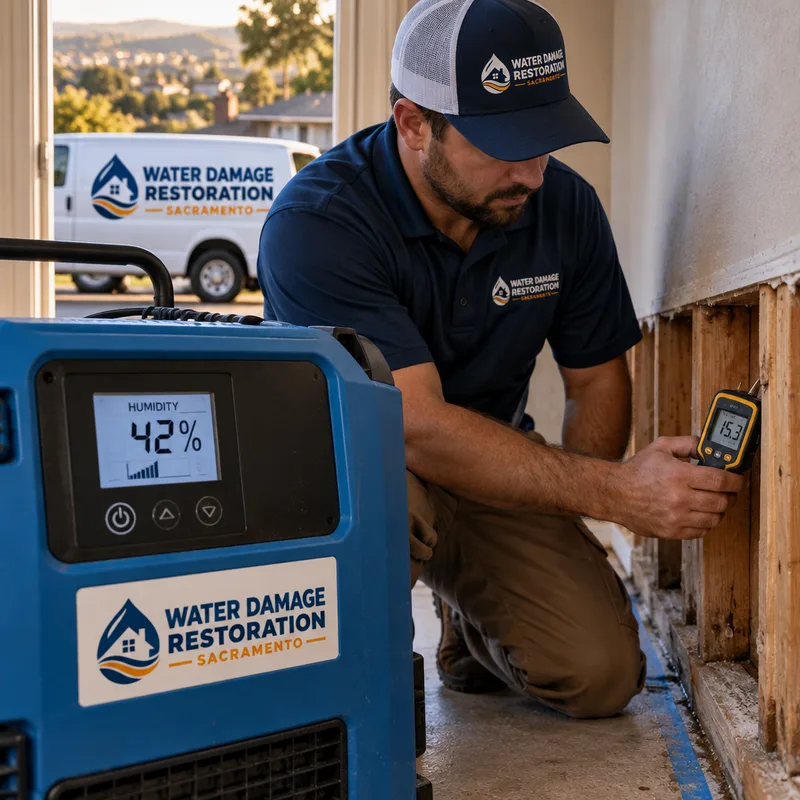
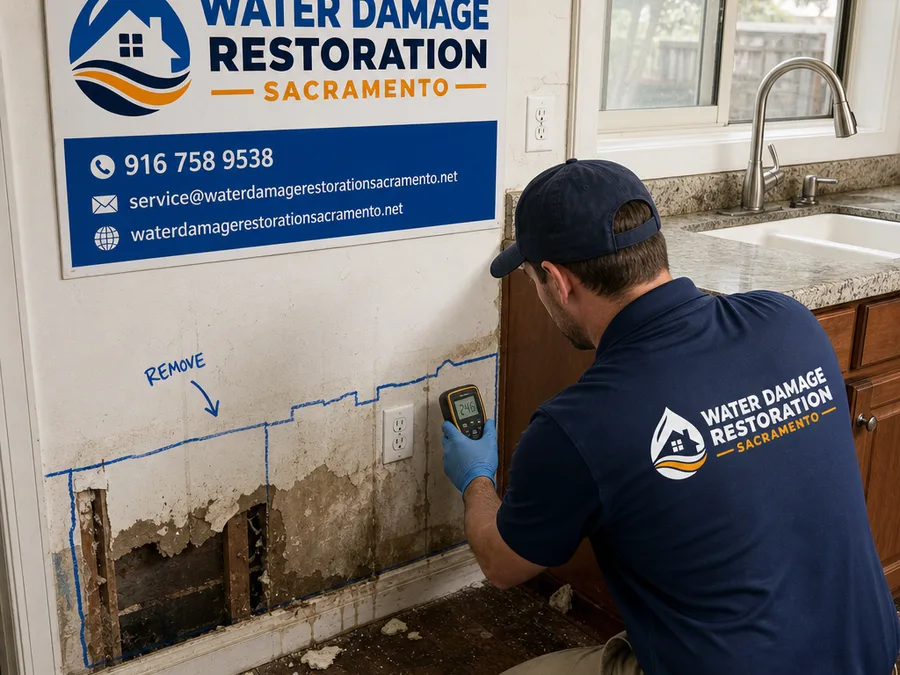
A proper restoration is more than running fans. We use non-invasive moisture meters and thermal imaging to map wet materials, then set up air movers and dehumidifiers based on room volume, material type, and where water traveled. When wet drywall, insulation, or flooring cannot be dried effectively, we remove only what is necessary to expose cavities and prevent trapped moisture. Throughout drying, we take daily or scheduled readings so you have objective proof of progress and a clear end point.
If the water came from a clean source, the work may be mostly drying and minor removal. If it involved contamination—for example, sewage or ground water—the scope shifts to controlled containment, disposal, and disinfection steps appropriate to the category of water.
Damage Indicators
Drywall can hold moisture behind the surface; bubbling, peeling, and soft spots often mean the cavity is wet and needs verified drying.
Wood and laminate react quickly to moisture. Early drying can sometimes save sections, but trapped moisture under floors can keep damaging the subfloor.
A lingering smell can indicate moisture in insulation, under cabinets, or behind baseboards where air cannot circulate without targeted access.
A spreading ceiling or wall stain suggests an active leak above or slow migration through materials. The source needs to be confirmed, not assumed.
If water is near electrical components, treat it as a safety issue first. Restoration starts after the area is safe to access.
Restoration Process
We identify the source and category of water, then use meters and thermal imaging to outline what is wet, including materials that look dry on the surface.
We extract standing water, protect unaffected areas, and set up containment if needed to control dust and airflow during drying or removal.
If materials cannot be dried in place, we remove targeted sections such as baseboards, wet drywall, insulation, or flooring to prevent moisture from being sealed in.
Air movers and dehumidifiers are placed for effective airflow and humidity control. We track moisture readings and adjust equipment as conditions change.
We clean affected surfaces and use appropriate antimicrobial products when conditions call for them. Deodorizing focuses on the source material, not masking odors.
Once materials are verified dry, we provide a clear repair scope for rebuild items such as drywall, paint, trim, and flooring so the property can return to normal.
Cost Guidance
Water damage restoration in Citrus Heights typically ranges from about $900 to $4,500 for small to mid-size losses. A minor clean-water leak with limited drying is often $900 to $2,000, while larger multi-room drying with removal of wet drywall or flooring commonly runs $2,000 to $8,000+, especially when contamination or extensive rebuild is involved.
Final cost depends on how far water traveled, the water category, what materials are affected—drywall, insulation, hardwood, or cabinets—equipment days needed, access, and documentation requirements. Exact pricing is confirmed after an on-site inspection and moisture readings.
Project Verification
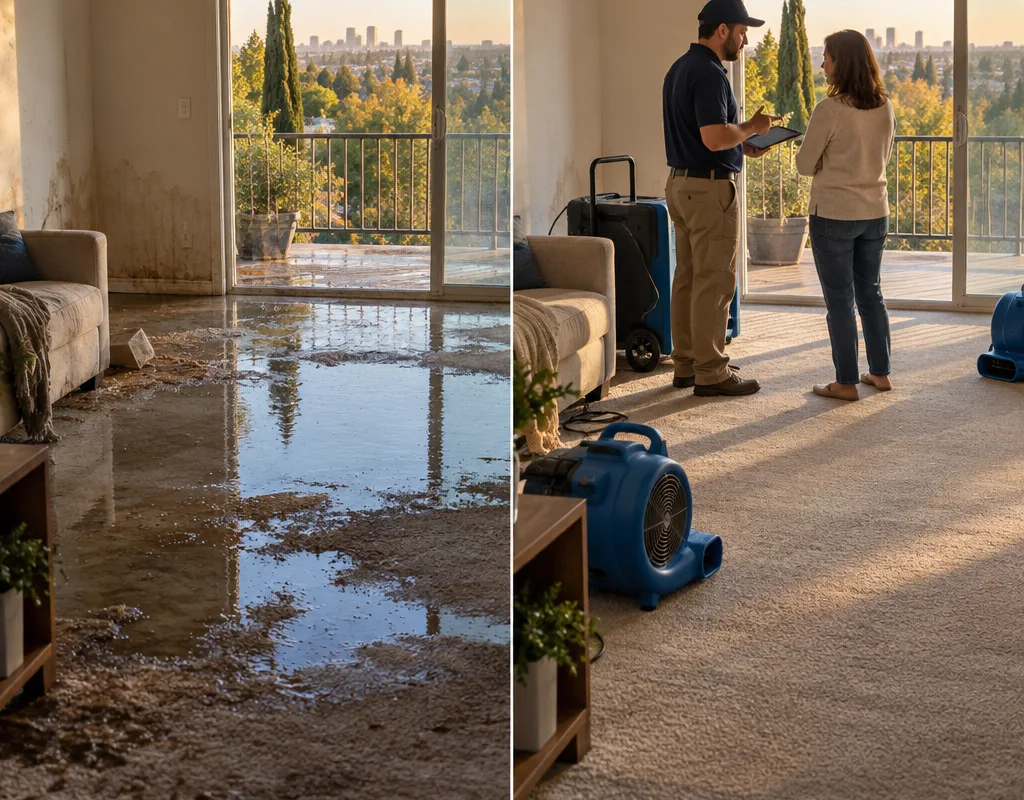
Citrus Heights Property Context
In Citrus Heights, we see a mix of older and newer construction, and that matters for drying. Older homes often have layered flooring and repeated remodels, which can create hidden voids where water migrates under thresholds and into adjacent rooms. Slab-on-grade foundations can also keep moisture trapped at the base of walls when water reaches the bottom plate area.
Our approach is to confirm conditions rather than guess. Moisture mapping helps locate wet materials behind baseboards, under floating floors, and around cabinets. We also plan work around real-life access constraints: occupied homes, rentals with tenant schedules, and garages or utility rooms where water heaters and laundry connections are common sources.
If your loss is tied to storm runoff or a crawlspace, the cleanup rules change because that water is treated as contaminated. When that happens, we can also help you understand when sewage cleanup and restoration is the safer scope than a standard dry-out.
Frequently Asked Questions
Drying should start as soon as the source is stopped and the area is safe, ideally within the first 24 hours. Early extraction and dehumidification reduce swelling in wood and drywall and limit how far moisture wicks up walls and into cabinets.
Sometimes, yes, but only if moisture readings show materials can be dried to an acceptable level in place. If water is trapped behind drywall, under flooring, or in insulation, selective removal is often required to avoid sealing moisture into the structure.
Clean-water losses (Category 1) usually focus on drying and cleaning, while contaminated water (Category 2 or 3) requires controlled removal and disinfection because affected porous materials cannot be safely cleaned. The water category directly affects both the scope and the disposal requirements.
Yes. We document the affected areas, moisture readings, equipment usage, and the restoration steps performed so there is a clear record of what happened and what it took to dry and clean the property.
Most dry-outs take about 3 to 5 days, but the timeline depends on the amount of water, the materials involved, and how quickly drying can be started. Dense materials, multiple layers of flooring, and wet insulation commonly extend the drying time.
Yes. Some clients have already completed mitigation and need repairs like drywall, texture, paint, trim, or flooring. If that is your situation, we can review what was dried and what was removed, then provide a repair scope; fire-related rebuilds are handled separately through our fire damage restoration service.
Start With an Inspection
Tell us what happened and what rooms are affected. We will schedule an on-site inspection, identify what needs to dry or be removed, and give you a written plan to get the property back to normal.