Plumbing leaks that soak cavities
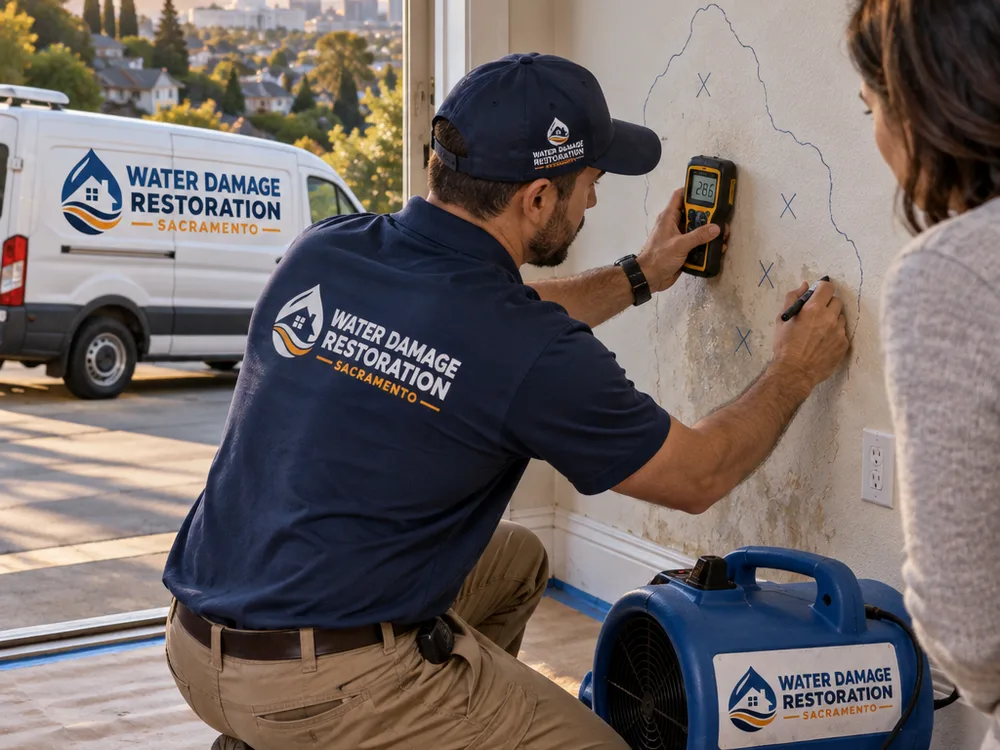
Pinholes in copper, failed angle stops, supply line bursts, and slow leaks under sinks often saturate drywall from the inside out. We locate the wet boundary with moisture mapping so drying is not guesswork.
Serving Sacramento, California & surrounding areas
24/7 Emergency Response
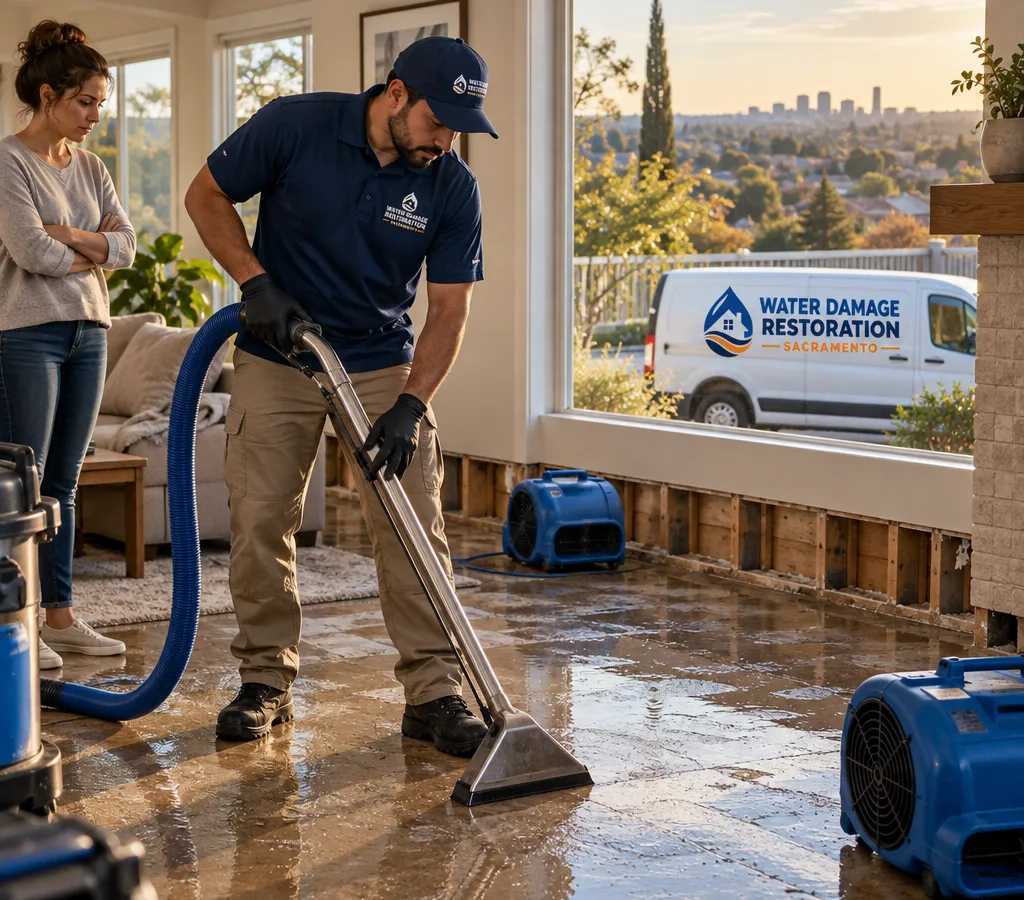
Water Damage Restoration · Carmichael
Rapid water removal, professional drying, and clear documentation to help protect your property and limit mold risk after a leak, flood, or backup.
Immediate Response
When water gets into building materials, the clock matters. Drywall can wick moisture, insulation can hold it, and wood framing and subfloors can start to swell or cup if drying is delayed. Our water damage restoration Carmichael team, backed by learn more about us, focuses on the work that actually stops the damage: controlled water removal, professional drying and dehumidification, and a plan for repair once the structure is dry.
We handle common local scenarios such as supply-line failures, overflowing tubs and toilets, washing machine leaks, water heater failures, roof leaks during storms, and water intrusion around doors and windows. If the water source is contaminated, such as a sewage backup, we treat it as a Category 3 loss with the correct containment, disposal, and cleaning steps before rebuilding.
You will get straightforward communication, moisture readings that show what is wet and what is dry, and documentation that supports insurance claims when you choose to file. Water damage is stressful; the process should not be.
Extraction and Drying
A proper water damage restoration job is more than drying what you can see. The goal is to remove water, prevent secondary damage, and return the area to a clean, safe condition.
Typical scope includes:
If you are working through an insurance claim, we keep documentation organized: photos, daily equipment logs when applicable, and moisture readings that help justify drying time and the final clearance for repairs.
Our crews are dispatched from Sacramento, and you will work with the same water damage restoration team through the drying and repair plan, not a different handoff at every step.
What We Address
Pinholes in copper, failed angle stops, supply line bursts, and slow leaks under sinks often saturate drywall from the inside out. We locate the wet boundary with moisture mapping so drying is not guesswork.
Washing machine overflows, refrigerator supply line failures, and clogged condensate drains can spread under flooring fast. Early extraction and perimeter checks help prevent swelling and delamination.
During heavier rain, water can travel along rafters and show up far from the entry point. We trace moisture patterns and set drying where the water actually went, not only where stains appear.
Backups require containment, removal of affected porous materials, and detailed cleaning. Category 3 losses are handled with PPE and disposal steps that protect occupants.
In multiplexes and attached structures, moisture can cross unit lines through party walls and shared chases. We document boundaries carefully and communicate what we can verify with readings.
Response Process
We start by confirming the water source is stopped and the area is safe to enter. If power, electrical outlets, or ceiling bulges are involved, we plan work to reduce risk before equipment is staged.
We document affected rooms, take initial readings, and map likely migration paths into adjacent spaces, closets, and below-grade areas when applicable. This is where scope is set.
Standing water is extracted first, then we remove materials that cannot be dried in place or that would trap moisture, commonly pad, swollen baseboards, or wet drywall at the flood cut.
We set air movers and dehumidifiers based on the class of loss and the materials involved. Moisture is re-checked, equipment is adjusted, and drying continues until readings stabilize at dry standards for the structure.
When the category and conditions require it, we clean and treat affected surfaces. Once dry, we provide the documentation needed to move into repairs such as drywall, trim, flooring, and paint.
Cost Guidance
Water damage restoration in Carmichael typically ranges from about $1,200 to $6,500+, with small contained leaks on the low end and multi-room losses, contaminated water, or significant tear-out on the high end. Many projects price out as a mitigation phase—extraction, demolition as needed, drying equipment, and monitoring—plus a separate repair scope to put finishes back.
Final cost changes with how far water traveled, the material affected, category of water, access, and how long the area stayed wet. Exact pricing is confirmed after an on-site inspection and moisture mapping.
Homeowner Experiences
“We had water under the laminate and into the wall after a supply line failed. They explained what needed to come out, showed us moisture readings each visit, and the drying equipment was placed so it didn't block the whole house.”
“After a toilet overflow, they treated it like a real sanitation issue, not just a wet floor. The containment and cleanup were thorough and the paperwork made the insurance side much easier.”
Frequently Asked Questions
Drying should start as soon as the leak or intrusion is stopped, ideally the same day, because water keeps wicking into drywall, trim, and subfloors even after the visible water is gone. Early extraction and dehumidification reduce swelling, staining, and the conditions that allow mold to take hold.
Sometimes drywall can be dried in place, but wet insulation usually has to be removed because it traps moisture and slows drying. The decision depends on how saturated the cavity is, the category of water, and whether we can create airflow inside the wall safely using openings and containment.
Clean water (Category 1) comes from a sanitary source like a broken supply line, while sewage is Category 3 and requires containment, removal of affected porous materials, and detailed cleaning and disinfection. Category affects both the safety procedures and what materials can be salvaged.
Yes. We document the affected areas with photos, moisture readings, and notes on equipment and drying progress so you have support for your claim. Coverage still depends on your policy and cause of loss, but clear documentation helps prevent scope disputes.
Mitigation and drying commonly take 3 to 7 days, but the timeline depends on how wet the structure is, the materials involved, and whether there is contamination. Repairs can add additional time, especially when flooring, cabinets, or multiple rooms need reconstruction.
Stop the water source if you can do it safely, shut off power to affected areas if outlets or ceilings are wet, and move small items out of the wet zone. Avoid running household fans into contaminated water areas, and avoid lifting wet carpet because you can spread contamination or damage tack strips.
Start the Recovery Plan
Tell us what happened and where the water traveled. We will walk you through immediate next steps, inspect for hidden moisture, and give you a clear plan to dry, clean, and restore the affected areas.